
RV Refrigerator Fires GUIDE: Why They Happen, How to Stop Them, and What Tools You Need

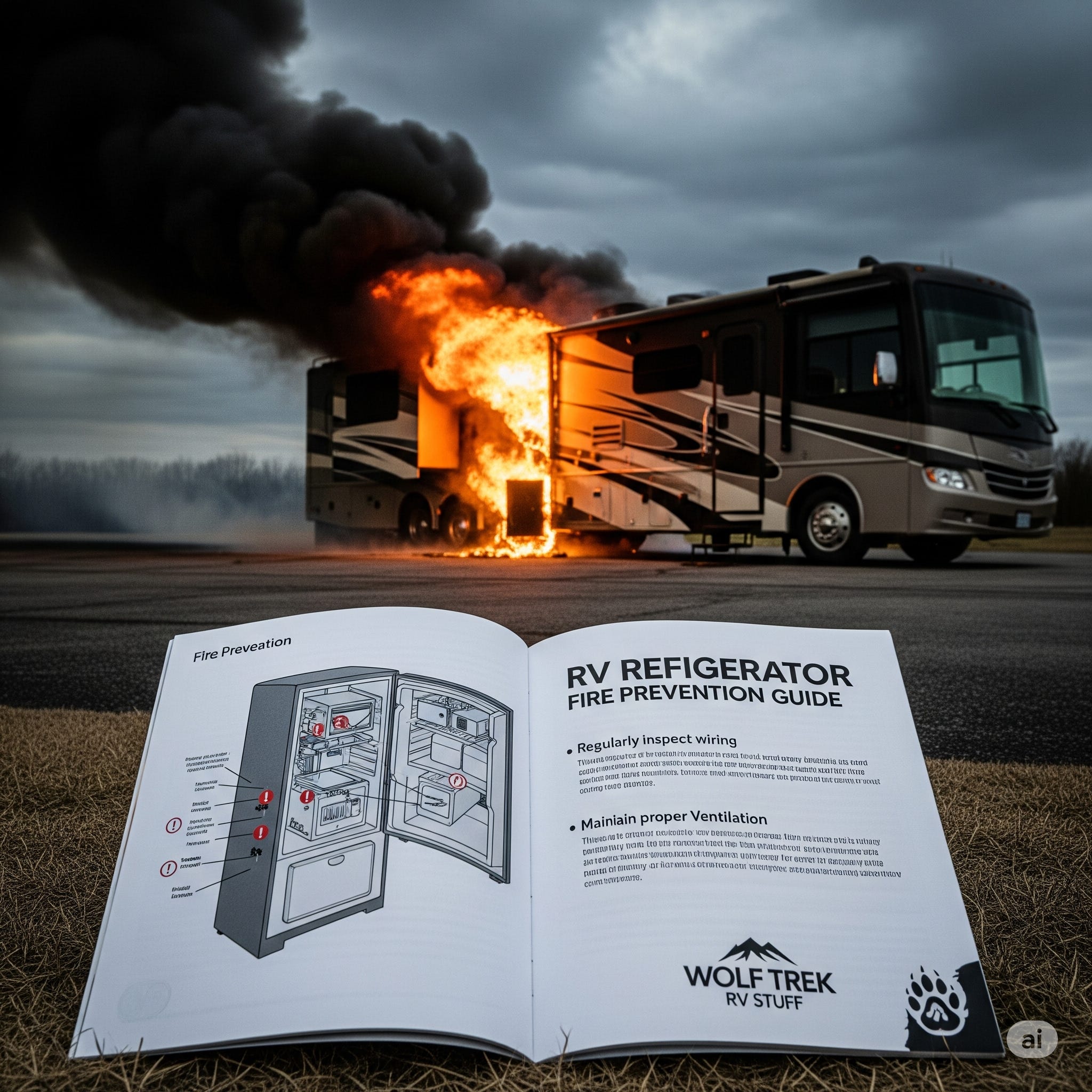
If you’re an RVer, or have signed up for Facebook Groups, I know you have seen the images and stories of RV Fires. There are many reasons, but the standing commentary on any RV fire, whether joking or not, is “it’s probably because of the refrigerator. There is a reason it’s become a joke. This type of fire happens far more often than necessary.
RV refrigerator fires are a very real concern. Keep in mind that while sometimes the item may be defective, or not up to snuff in the quality department, more often than not, these fires are due to propane systems, electrical failures, or simple neglect. This guide is a short and sweet deep dive into the why, the how, and the exact tools and habits to keep you safe. We’ll cover brands plus step-by-step safety checks and replacement advice. We start with the basics so even those new to RV life can understand and follow along with useful tips and tools.
We are going to cover different types of refrigerators along with solar considerations for fire safety as well.
RV refrigerators come in three main types:
propane absorption
electric compressor
hybrid models.
Each has unique risks.
1. Propane Absorption Fridges (The Open-Flame Risk)
How They Work: These fridges use a flame to heat a mix of ammonia, water, and hydrogen. No moving parts, but the open flame + gas = fire risk.
Common Causes:
Propane Leaks: Gas smells like rotten eggs (added for safety). Even a tiny spark (like flipping a light switch) can ignite it.
Clogged Burner Tubes: Spider nests, lint, or dirt can block gas flow causing backfires. Be sure any vent on the basement door or propane area door are clear, and if replacing screening on the vent, make sure it is adequate enough.
Driving with Propane On: Movement destabilizes the flame. People believe that only motorhomes safely run these while moving, yet it is still a good idea to turn off propane when moving as long as the fridge can reroute to another power source, simply because you may go through a tunnel or gas up at a station and forgot the propane is open. Remember, any leaking can be hazardous anytime, and you may not always know.
2. Electric Compressor Fridges (The Dust Bomb Risk)
How They Work: Like home fridges but smaller, powered by 12V DC (battery) or 120V AC (shore power).
Common Causes:
Dusty Coils: Dirty coils overheat and can fry wiring.
Battery Drain: Old lead-acid batteries can’t handle the power draw, leading to overheating. Which means if you replace your fridge, make sure the voltage is correct.
3. Hybrid Fridges (The Double Trouble)
How They Work: Switch between propane, 120V, and 12V.
Common Causes:
Leveling Issues: Absorption fridges need your RV perfectly level. It is so critical because just a 2° tilt = flame failure.
Electrical Overloads: Hybrid models still fry if inverters or regulators fail.
Step-by-Step Prevention: Your Safety Routine
1. Monthly Propane Leak Checks (Do This Every Time)
The Soapy Water Test:
Mix dish soap and water in a spray bottle.
Spray all propane connections (tank valve, fridge line). Bubbles mean gas is escaping. Turn off the tank and call a pro.
Upgrade to GasStop:
Install the GasStop Automatic Shut-Off Valve between the propane tank and regulator. If a leak is detected, it automatically cuts gas flow—no panic needed.
2. Clean Coils Like Your Life Depends on It (Because It Does)
Why It Matters: Dust on coils = overheating = fire.
What to Do:
Buy a long, flexible coil brush (like Ace Hardware’s 12" model) Lowes, Home Depot or online
Unplug the fridge.
Brush coils in the back or bottom and draw the brush out, clean it and do it again until the brush ceases to bring out dust. Do this every month, especially in dusty environments.
3. Level Your RV Before Running Propane Fridges
The Rule: Absorption fridges need your RV perfectly level. A bubble level on the fridge shelf tells you if you’re off-kilter. Most fridges have feet that can be adjusted, just remember to have your rv level before leveling your fridge or level may not actually be level.
4. Never Drive with Propane On
The Danger: Movement during travel destabilizes the flame and causes propane pooling on the floor wherever it is.
What to Do: Turn off propane before hitting the road. Motorhome owners: keep other propane appliances off while driving.
5. Replace Old Hoses and Regulators
The Lifespan: Propane hoses degrade after 5–7 years. Check for cracks, stiffness, or leaks.
Upgrade to:
Suburban SF-106 Regulator: Keeps pressure at 11–12” WC (water column). Cheap regulators = pressure spikes = leaks.
DOZYANT Inline Gauge: Screws onto the tank valve. Green = safe. Red = refill or check for leaks.
Tools You Must Own (And How to Use Them)
1. Propane Leak Detectors (Your Nose Isn’t Enough)
Safe-T-Alert 40-910: Hardwired into your RV. Installs near the floor (propane sinks) and screams if gas builds up. Replace every 5–7 years.
Alarm: You can purchase propane alarms and place one on the floor of where your propane tank sits if there is room.
GasStop Automatic Valve: Pairs with Safe-T-Alert. When the alarm sounds, GasStop slams the gas line shut—no need to fumble with tank valves.
2. Coils Clean Like a Pro
Ace Hardware 12" Flexible Coil Brush: Cone-shaped to reach tight spots behind the fridge. Dust = overheating = fire. Use it monthly.
Dometic Coil Bristle Tool: Sold on Amazon. Designed for RV fridges, especially older Norcold and Dometic models.
3. Propane Tank Gauges
DOZYANT Inline Gauge: Screw it onto the tank valve. Green = safe pressure. Red = overfilled or faulty.
Mopeka Smart Gauge: Bluetooth-enabled. Tells you tank levels and leaks on your phone. Perfect for tech-savvy RVers and for when away from your RV should you forget to turn off the propane.
4. Bubble Level (Your Fridge’s Best Friend)
Swan Self-Adhesive Level: Stick one on the fridge shelf. If the bubble isn’t centered, adjust your RV’s jacks until it is.
NOTE: Attach small bubble levelers along the outside of your RV on the front and rear sides and each end of your RV. Get. your RV level before putting a level on your fridge and leveling that, so that when you check the fridge your level reads true.
Checking New Propane Tanks: Don’t Get Blown Up
Buying a newly filled tank? Follow these steps:
Soapy Water Test: Spray connections. Bubbles = return it.
Pressure Check: Use a DOZYANT gauge. Green = safe. Red = overfilled or faulty.
Sniff Test: Propane must smell like rotten eggs. If it’s faint, the odorant might be low—still dangerous.
Hose Inspection: New tanks often come with old hoses. Check for cracks or stiffness. Replace if older than 5 years.
RV Fridge Brands: What You Need to Know
Dometic
History: A Swedish company founded in 1922. Expanded into RVs in the 1970s. Now owns Atwood Mobile Solutions.
Best Models:
DM2652RB: Electric-only fridge (no gas = no fire risk). Auto-defrost and reversible doors.
RM3662: 3-way fridge with auto-switching power modes. Built-in leveling indicator helps avoid flame failure.
Watch Out For: Older absorption models (pre-2018) had cooling unit defects. Check recall status on Dometic’s site.
Norcold
History: Started in California in 1200 series models had overheating issues.
Best Models:
N8X: 2-way fridge (propane + AC). Error codes (like “E1” = ignition failure) make troubleshooting easy.
N1210: 4-door 3-way fridge with an ice maker. Auto-defrost reduces maintenance.
Watch Out For: Ammonia leaks (yellow residue or sharp smell) = immediate replacement.
Thetford
History: A Dutch company that acquired Norcold in 2020. Known for rugged marine fridges.
Best Models:
Polar NV Series: DC compressor fridges (no propane = no fire risk). Compact for vans or small RVs.
Freezer Fridges: 2-way (AC + DC) with low maintenance.
Watch Out For: High power draw on lead-acid batteries. Upgrade to AGM or lithium.
How to Avoid Insurance Denial (Because They’ll Try to Say “No”)
Insurance companies love loopholes. Don’t let a fire become a paperwork nightmare:
Disclose Full-Time Living: If you’re a full-timer, your insurer needs to know.
Document Maintenance: Keep receipts for GasStop valves, coil cleanings, and regulator swaps.
Use Approved Regulators: Cheap regulators = pressure issues = leaks. Stick with Suburban SF-106 or Camco.
Replacing Your Fridge:
Propane Haters:
Dometic DM2652RB: Electric-only fridge with 10 cu. ft. of space. No gas = no fire.
Thetford Polar NV Series: DC compressor fridge for solar setups.
Hybrid Lovers:
Norcold N8X: Auto-switches between propane and AC. 8 cu. ft. for solo travelers.
Dometic RM3662: Auto-switching power. Just keep it level and clean the burner annually.
Propane Pros:
Norcold 1200 Series: Proven off-grid performance. Replace cooling unit if you see yellow residue or ammonia smells.
When Fire Strikes: Your Step-by-Step Emergency Plan
Evacuate First: Get everyone out. Propane fires spread fast.
Shut Off Propane: Locate the emergency valve near the tank. Turn it clockwise to kill the gas.
Extinguish (If Safe): Use a Class ABC extinguisher aimed at the base of the flame.
Call a Pro: Even if the fire’s out, have an RV-certified tech inspect the system.
Final Thoughts: Safety Isn’t Optional
RV fridge fires are a risk with any propane or electric appliance. But with the right tools (leak detectors, GasStop valves) and habits (coil cleanings, pressure checks), you can avoid disaster.
Your Takeaway:
Propane users: Your nose (rotten egg smell) + soapy water = early warnings.
Electric users: Dust is your enemy. Clean coils monthly.
Hybrid users: You’ve got both worlds to worry about—leveling and electrical safety.
No matter the brand, always:
Test detectors monthly.
Shut off propane in tunnels or gas stations.
Call a certified tech for coolant leaks or error codes.
The road’s meant for freedom, not fear. Arm yourself with this guide, stay informed, and keep your fridge from ruining your trip.
SOLAR + REFRIGERATOR FIRE SAFETY CONSIDERATIONS
RV Refrigerators and Solar Power: Are There Fire Risks?
If you’re running your RV fridge on solar power, you’re already ahead of the game in terms of fire safety. Solar-powered fridges (typically 12V DC compressor models) eliminate the open flame and propane risks of absorption fridges. But that doesn’t mean they’re 100% fireproof. Let’s break down the real risks and how to avoid them.
Why Solar Fridges Are Safer
No Propane = No Gas Leaks: Solar fridges run purely on electricity from batteries, so there’s no flammable gas to worry about. This alone slashes your fire risk by half compared to propane models.
Efficient Power Use: Modern 12V fridges (like the Dometic DM2652RB or Norcold N8X) draw 40–80 watts per hour, making them ideal for solar systems. Pair them with lithium batteries (which handle power draw better than lead-acid) for even safer operation.
No Flame Failure: Absorption fridges rely on a delicate flame that can go out if the RV tilts. Solar fridges don’t care about your parking angle—they’ll keep running as long as they’ve got power.
Solar Fridge Fire Risks: What You Should Worry About
Even though solar fridges are safer, the system around them can still cause trouble:
Battery Overheating:
Lead-acid batteries can overheat if overcharged or underpowered, leading to thermal runaway (a fancy term for “melting and catching fire”).
Fix: Upgrade to lithium batteries (e.g., Battle Born or RELiON). They’re more stable and last longer.
Faulty Wiring or Inverters:
Loose or corroded connections in your solar setup can spark. This is common in DIY installs where people skip proper fuses or use undersized wires.
Fix: Use RV-rated solar charge controllers (like Victron Energy SmartSolar) and professional installation. Never daisy-chain solar panels or batteries without a surge protector.
Solar Panel Installation Risks:
Poorly mounted panels (e.g., using flammable adhesives or improper grounding) can overheat, especially in high temps.
Fix: Follow the French guide UTE C15-712-1 for safe solar installs. Use fire-resistant mounting hardware and inspect wiring annually.
Electrical Shorts:
A screw or loose wire in your solar system can short-circuit, especially in older RVs with outdated 12V wiring.
Fix: Install a rapid shutdown system for solar panels. This cuts power instantly in emergencies, keeping you safe from electrical fires.
Best Practices for Solar Fridge Safety
Size Your Solar System Right:
A 100W solar panel + 100Ah lithium battery combo can power a 12V fridge indefinitely in sunny climates. For cloudy areas, add a second panel or a larger battery bank.
Monitor Voltage:
Use a Kill A Watt meter to track fridge power draw. If it spikes above 80 watts, you might need a bigger battery.
Keep It Clean:
Dust on solar panels reduces efficiency and creates hotspots that can overheat. Use a soft brush to wipe them down monthly.
Test Your Setup:
Run the fridge for 48 hours on solar + battery alone. If it struggles to stay cold, you might need a higher-wattage panel or a better inverter.
Final Thoughts: Solar Isn’t Risk-Free, But It’s Way Safer
Solar-powered fridges are a game-changer for off-grid RVers. They’re quieter, cleaner, and don’t carry the same fire risks as propane models. But safety still depends on your setup:
Batteries: Lithium > lead-acid.
Wiring: Use pros for installs.
Maintenance: Clean panels and test connections.
If you’re new to solar, start small. A single 100W panel + lithium battery can power your fridge for weeks. Just don’t skimp on the basics—your RV’s safety (and your peace of mind) depends on it.
LASTLY - I have another article strictly for Solar Maintenance , and you will not want to miss this one: RV Fire Prevention
Until next time! HAPPY RVING
SUBSCRIBE 100% FREE
#RVRefrigeratorSafety #PropaneSafety #DometicFridgeTips #NorcoldRecall #RVFirePrevention #GasStopValve #SafeRVTravel #VanLifeSafety #PropaneLeakDetection #RVInsuranceTips #NorcoldErrorCodes #DometicRecallCheck #RVFridgeMaintenance #RVFireExtinguisher #PropaneTankCheck #RVSolarFridgeSafety #RVFridgeSolarSafety
Reference Links
RVShare – The Ultimate Guide to RV Fridges
WholesaleWarranties – RV Fridge Troubleshooting
ApplianceUpdate – Norcold Maintenance Tips
Thetford – N4150 Model Safety Info
Outdoorsy – Dometic vs. Norcold Models
Daily Car Tips – Norcold Cooling Issues
RVShare – Norcold Pros/Cons
RvingKnowHow – Dometic Temperature Adjustment
TheRVGeeks – RV Fridge Maintenance
CampingTheCamp – Dometic Check Light Guide
TroubleshootingBlog – Norcold Error Codes
ApplianceUpdate – Best RV Fridge Brands
Daily Car Tips – Fridge Not Working on Electric/Gas
Daily Car Tips – Dometic Refrigerator Problems
TheRVGeeks – Coils & Leveling Tips
RVRefrigerator.net – Gas vs. Electric Cooling
If you're using a gas absorption unit, be careful when washing your unit. Water can get in the vents on top and drip down onto electronics behind the bottom vents. Best to tape a cover over the PCB about the size if an index card.
I've had to replace mine, oops. The new one came with a better cover. I still don't trust it.
Regarding the article. I think the new 12V units are the best. Cheaper to replace and they work better. Our gas/absorption unit works fine, but Ice Cream would be a problem. Luckily we don't eat that anymore.