
RV Consumer Guide to Tire Pressure Monitoring Systems (TPMS)
For RV, Tow Vehicles and more

Subscribe 100% FREE
This addition is LOADED with everything you could possibly want or need to know and then some. Take a look!
Table of Contents:
Why TPMS is a Non-Negotiable
Why RVs (Especially 5th Wheels & Tow Trucks) Need TPMS
Functionality and Critical Benefits
Direct vs. Indirect & Factory vs. Aftermarket
Aftermarket TPMS Buying Checklist & Tips
Top-Rated Aftermarket TPMS for RVs: Detailed Reviews
Budgeting for Your TPMS: Understanding the Costs
Conclusion: Investing in Safer, Smarter RV Travels
Introduction: Why TPMS is a Non-Negotiable Safety Upgrade for Your RV Journey
Embarking on an RV adventure promises freedom and exploration, but it also carries unique responsibilities, particularly concerning vehicle safety. Among the most critical components demanding attention are the tires. Unlike standard passenger cars, RVs, especially larger rigs like 5th wheels and travel trailers, place immense stress on their tires due to heavy loads and the sheer number of wheels involved, some hidden from the driver's view. A tire failure on an RV isn't just an inconvenience; it can be catastrophic, leading to loss of control, significant damage to the vehicle structure, and potentially serious accidents. The peace of mind that comes from knowing your tires are properly inflated and operating within safe temperature limits is invaluable.
This is where a Tire Pressure Monitoring System (TPMS) becomes an essential upgrade. A TPMS is an electronic system meticulously designed to monitor the air pressure, and often the temperature, inside your vehicle's tires. It acts as a vigilant guardian, alerting the driver to potentially hazardous conditions like under-inflation or overheating before they escalate.
While many modern trucks come equipped with factory TPMS, these systems typically only monitor the truck's tires, leaving the crucial trailer tires unmonitored. This guide serves as a comprehensive consumer resource focused specifically on aftermarket TPMS solutions. Its purpose is to equip RV owners, particularly those with 5th wheels or substantial trailers, with the knowledge needed to understand TPMS technology, identify critical features, compare leading brands, and ultimately select and purchase the system best suited to ensure safer, more efficient, and worry-free travels.
Decoding TPMS: Functionality and Critical Benefits
Core Function: How TPMS Works
At its heart, a TPMS continuously tracks the air pressure within each monitored tire. This real-time data is transmitted to the driver via various interfaces, such as a simple warning light on the dashboard, a pictogram display, a dedicated digital gauge, or increasingly, a standalone monitor or smartphone application. If the pressure in one or more tires drops significantly below (or in some systems, rises above) the safe, recommended level, the TPMS triggers an alert, prompting the driver to take action.
Beyond pressure, many advanced TPMS systems, especially those favored for RV use, also monitor tire temperature.This is a vital function for RVs, as excessive heat is a primary indicator of potential tire failure under heavy load. The system processes this pressure and temperature data, providing timely warnings before a critical situation develops.
Universal Advantages
Regardless of vehicle type, TPMS offers significant benefits:
Enhanced Safety: This is the paramount benefit. Properly inflated tires are fundamental to safe vehicle operation. Under-inflation compromises handling, increases braking distances, and drastically elevates the risk of tire blowouts. Over-inflation can also negatively impact handling and increase blowout risk. TPMS provides an early warning system, alerting drivers to these dangerous conditions. Studies have shown a significant link between under-inflated tires and accidents; the National Highway Traffic Safety Administration (NHTSA) notes that underinflated tires are substantially more likely to be involved in crashes , and international safety organizations echo this, attributing a notable percentage of fatal accidents to under-inflation. TPMS directly mitigates this risk.
Improved Fuel Efficiency: Tires operating below their recommended pressure exhibit increased rolling resistance, forcing the engine to work harder and consume more fuel. Maintaining correct tire pressure with the help of TPMS can improve fuel efficiency by up to 3% or more, translating to tangible savings at the pump – potentially as much as 11 cents per gallon. The US Department of Transportation estimates billions of gallons of fuel are wasted annually due to underinflated tires.
Extended Tire Life: Under-inflation is a leading cause of premature tire wear, particularly on the edges, while over-inflation can accelerate wear in the center. By helping maintain optimal pressure, TPMS promotes even tread wear, significantly extending the usable life of tires. This not only saves money on replacements but also reduces tire waste. Proper inflation can extend tire life by thousands of miles.
Environmental Benefits: The combination of improved fuel efficiency and extended tire life has positive environmental implications. Burning less fuel reduces CO2 emissions, and needing fewer replacement tires lessens the environmental impact associated with tire manufacturing and disposal.
Why RVs (Especially 5th Wheels) Need TPMS More
While beneficial for all vehicles, TPMS transitions from a helpful feature to a near-essential safety system for Recreational Vehicles, particularly large trailers and 5th wheels. The inherent characteristics of RVs amplify the risks associated with tire issues:
Multi-Tire Complexity: RVs often have six, eight, or even more tires spread across the tow vehicle and trailer. Manually checking pressure on all these tires, especially the hard-to-reach inner duals on a truck or trailer, is time-consuming and often neglected. A TPMS provides constant, simultaneous monitoring of every connected tire, offering a comprehensive overview unavailable through manual checks alone.
Detecting Slow Leaks & Hidden Issues: A slow leak or gradual pressure loss in a trailer tire might be imperceptible to the driver until it's too late. Unlike a car where a soft tire might affect handling noticeably, the weight and articulation of an RV setup can mask these subtle changes. TPMS excels at detecting these slow leaks, providing critical early warnings.
Heavy Loads & Heat: RVs operate under significantly heavier loads per tire compared to passenger cars. This increased load generates more friction and heat within the tire, especially during long drives or in hot weather. Excessive heat drastically increases the risk of tire failure and blowouts. TPMS systems that monitor temperature provide an indispensable layer of protection by alerting the driver to overheating conditions before they become critical.
Blowout Consequences: A tire blowout on a passenger car is dangerous; on a heavy, high-profile RV or trailer, it can be devastating. The forces involved can cause a complete loss of control and lead to extensive, costly damage to the RV's structure, tearing apart wheel wells, plumbing, and electrical systems. The early warning provided by a TPMS can allow the driver to slow down and pull over safely, potentially preventing thousands of dollars in damage and avoiding a serious accident. In many cases, a TPMS can pay for itself by preventing just one such incident.
For RV owners, therefore, the standard benefits of TPMS are significantly magnified. It's not merely about compliance or marginal fuel savings; it's a fundamental investment in mitigating the substantial and specific risks inherent to operating heavy, multi-tired vehicles. It transforms from a convenience feature into a critical tool for safety and financial protection.
Navigating TPMS Technologies: Direct vs. Indirect & Factory vs. Aftermarket
Understanding the different types of TPMS technology is crucial for making an informed choice, especially when considering aftermarket options for an RV.
Direct (dTPMS): The Sensor-in-Wheel Approach
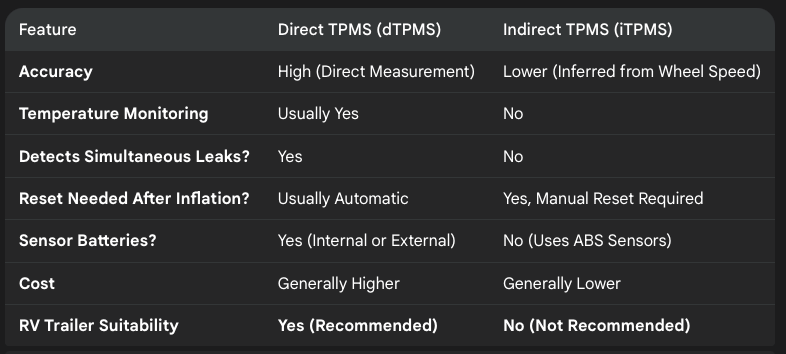
How it Works: Direct TPMS utilizes individual, battery-powered sensors located inside each wheel. These sensors are typically mounted on the valve stem (replacing the standard stem) or sometimes attached to the wheel rim with a band. They directly measure the air pressure (and usually temperature) within the tire cavity and transmit this data wirelessly, often via radio frequency, to a central receiver or display unit in the vehicle.
Pros: The primary advantage of dTPMS is accuracy. It provides real-time, specific pressure readings for each individual tire. Because it measures pressure directly, it's not easily confused by tire rotations, replacements, or uneven wear. Most direct systems also offer valuable tire temperature monitoring. The batteries within OEM or internal dTPMS sensors typically have a long lifespan, often lasting 5 to 10 years.
Cons: Direct systems generally have a higher initial cost compared to indirect systems. The sensors, particularly internal ones, can be susceptible to damage during tire mounting or dismounting. Replacing the batteries in internal sensors can be complex and often requires replacing the entire sensor unit, adding to long-term costs.While resynchronization after tire changes is often straightforward, it might sometimes require specialized tools.
Indirect (iTPMS): The ABS-Based Approach
How it Works: Indirect TPMS does not use dedicated pressure sensors in the wheels. Instead, it leverages the existing wheel speed sensors that are part of the vehicle's Anti-lock Braking System (ABS). The system works on the principle that an underinflated tire has a slightly smaller diameter and therefore rotates faster than a properly inflated tire at the same vehicle speed. By comparing the rotational speeds of all four wheels, the vehicle's computer can infer when one tire is spinning significantly faster and trigger a low-pressure warning.
Pros: The main advantages of iTPMS are lower cost, as it utilizes existing hardware, and reduced maintenance, as there are no sensor batteries to replace. The ABS sensors are also less likely to be damaged during tire service.
Cons: Indirect systems are inherently less accurate because they estimate pressure based on rotation rather than measuring it directly. They cannot detect a situation where all four tires are losing pressure slowly and equally (a common scenario due to neglect) because the relative wheel speeds wouldn't change significantly. iTPMS must be manually reset or recalibrated by the driver after adjusting tire pressures, rotating tires, or replacing tires. Their accuracy can also be compromised by factors like uneven tire wear, installing non-standard tire sizes, or even carrying heavy loads. Furthermore, iTPMS typically does not provide temperature readings and may require the vehicle to be driven for a certain distance before an alert is triggered.
Factory (OEM) vs. Aftermarket TPMS
Factory (OEM) TPMS: These are the systems installed by the vehicle manufacturer during production. In most modern vehicles mandated to have TPMS (like passenger cars and light trucks in the US since 2007), these are typically direct systems. OEM sensors are designed for a perfect fit and seamless integration with the vehicle's electronics, meeting stringent quality and reliability standards. They are usually covered under the vehicle's warranty. However, replacing failed OEM sensors can be very expensive, often costing significantly more than aftermarket alternatives. Crucially for RVers, the factory TPMS on a tow vehicle (like a pickup truck) is designed to monitor only the truck's tires, not the tires on any attached trailer.
Aftermarket TPMS: These systems are purchased and installed after the vehicle leaves the factory. They offer a way to add TPMS functionality to older vehicles or, more importantly for this guide, to extend monitoring capabilities to trailer or towed vehicle tires. Aftermarket systems are generally more cost-effective than buying OEM replacement sensors. They provide flexibility in choosing sensor types (internal, external cap, external flow-through) and display methods (dedicated monitor, smartphone app). While quality can vary between brands , reputable aftermarket systems designed for RVs are generally reliable. While potential interference with factory systems is a minor concern, most aftermarket RV systems are designed to operate alongside OEM truck systems without issue.
Given the limitations of indirect systems (poor accuracy, inability to detect simultaneous leaks, lack of temperature data) and the fact that factory OEM systems do not monitor trailer tires , the clear and necessary choice for comprehensive RV tire safety is an aftermarket direct TPMS. The precision, per-tire data, and temperature monitoring offered by direct systems are essential for managing the amplified risks associated with RV tires. Therefore, the remainder of this guide will focus on selecting the best aftermarket direct TPMS for your RV needs.
Your Aftermarket TPMS Buying Checklist: Essential Features for RV Owners
Choosing the right aftermarket direct TPMS involves considering several key features, especially with the unique demands of RVs and 5th wheels in mind.
Sensor Showdown: Internal vs. External
Aftermarket direct TPMS sensors primarily come in two mounting styles:
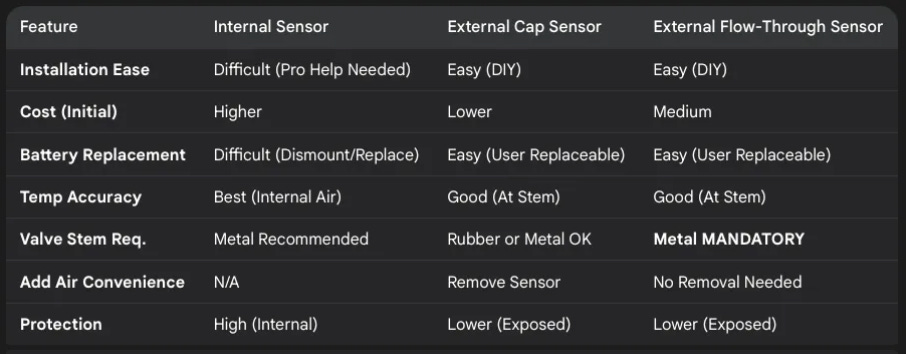
Internal Sensors: These sensors are mounted inside the tire assembly, either replacing the valve stem entirely or being secured to the wheel rim with a metal band.
Pros: They offer potentially the most accurate pressure and, critically, internal tire air temperature readings.Being inside the tire protects them from weather, road debris, physical damage, and theft. They provide a clean, factory look as they are hidden from view. Once installed, they require no further handling unless a battery fails.
Cons: Installation is complex, requiring the tire to be removed from the wheel, usually necessitating professional help and associated costs. The initial cost of internal sensor kits can be higher. Battery replacement is a major drawback; internal sensor batteries often last longer (e.g., 4+ years ), but when they deplete, the tire must be dismounted again, and often the entire sensor needs replacement as batteries are frequently sealed units. Internal sensors are less common in the RV aftermarket compared to external options.
External Sensors: These are the most prevalent type in the RV aftermarket. They simply screw onto the tire's existing valve stem in place of the standard valve cap.
Pros: Installation is extremely easy and can be done by the owner in minutes without special tools or tire removal. They are easily transferable between tires or vehicles. External sensor kits are generally more affordable than internal kits. Sensor batteries are often user-replaceable (typically lasting 1-2 years) without needing to dismount the tire.
Cons: Temperature readings might be less representative of the actual internal tire air temperature, as the sensor is measuring temperature at the valve stem. Being exposed, they are more vulnerable to damage from road debris, weather, or impacts (though generally robust) and potential theft (most kits include anti-theft mechanisms like locking nuts or special wrenches). Unless they are "flow-through" type, they must be removed each time air needs to be added to the tire. Improper installation (not tightening sufficiently) can potentially lead to air leaks at the valve stem, a common complaint if care is not taken.
External Sub-Types: Cap vs. Flow-Through Within external sensors, there's a further choice:
Cap Sensors: These are generally smaller and lighter. They function like a standard valve cap with integrated TPMS electronics. Air cannot be added or removed without first unscrewing the sensor. Due to their lower weight, they are often considered suitable for use on both standard rubber valve stems and metal valve stems.
Flow-Through Sensors: These sensors are designed with a passthrough valve, allowing users to inflate or deflate the tire without removing the sensor from the valve stem. This adds convenience, especially for frequent pressure checks or adjustments. However, they are typically longer and slightly heavier than cap sensors. Because of this added weight and leverage, flow-through sensors are almost universally recommended only for use on sturdy metal valve stems. Using them on standard rubber stems can cause excessive flexing, leading to air leaks or even stem failure over time. Some users also note that the flow-through design can slightly restrict airflow during inflation.
Display Decisions: Dedicated Monitor vs. Smartphone App
How the TPMS data is presented is another key consideration:
Dedicated Monitor: This involves a separate physical screen unit that mounts on the vehicle's dashboard or windshield, powered typically by a 12V adapter or USB cable.
Pros: The information is always visible at a glance without needing to interact with a phone. Alerts are typically immediate and clear (visual and audible). It doesn't occupy the phone screen, leaving it free for navigation or communication. Many RV-focused systems offer large, easy-to-read displays, sometimes in color. Some monitors automatically scroll through tire positions. Many have internal batteries allowing temporary wireless operation.
Cons: It adds another device to the dashboard, potentially creating clutter or obstructing view. Requires wiring for power (though internal batteries mitigate this temporarily). Some simpler monitors might go into a sleep mode, requiring interaction or an alert to wake up.
Smartphone App (Bluetooth): In these systems, the sensors communicate wirelessly via Bluetooth directly to an application installed on the driver's iOS or Android smartphone or tablet.
Pros: Eliminates the need for a separate display unit, reducing dash clutter. Leverages the existing smartphone and potentially a phone mount. App interfaces can offer rich features like data logging, detailed customization, and potentially integration with vehicle infotainment systems like Apple CarPlay or Android Auto for display on the main dash screen.
Cons: Relies on the phone being powered on, the app running (either in the foreground or background), and Bluetooth being active to receive real-time data and alerts. Using the phone screen for TPMS display prevents its use for other functions like navigation simultaneously (unless integrated with CarPlay/Auto). Alerts might be missed if the phone is silenced, the app crashes, or Bluetooth connection drops. Some systems mitigate this by including a small Bluetooth adapter or dongle that provides basic audible/visual alerts even if the phone/app isn't active.
Subscribe 100% FREE
Performance Metrics: Accuracy & Range
Accuracy: Look for systems specifying their pressure accuracy, which is typically within +/- 1 to 3 PSI for reputable aftermarket direct systems. Temperature accuracy might also be specified (e.g., +/- 5°F). Be aware that TPMS readings may differ slightly from a high-quality handheld gauge; consistency and warnings are key.
Pressure Range: This is critical for RVs. Ensure the system's maximum monitoring capability significantly exceeds the highest recommended cold inflation pressure for any of your tires (truck and trailer). Many RV tires, especially on larger Class A motorhomes or heavy 5th wheels, require pressures well over 100 PSI. Look for systems rated for at least 150 PSI, with higher ranges like 188 PSI, 210 PSI, or 232 PSI offering more headroom.
Temperature Range: Verify that the system monitors temperature, as this is a key safety feature for detecting potential failures in heavily loaded RV tires. Check the sensor's operating temperature range if listed (e.g., -4°F to 176°F or higher) to ensure suitability for various climates.
Alert Systems: What to Look For
A good TPMS should provide clear and timely warnings:
Types: Alerts should be both visual (e.g., flashing icon on screen, warning message, specific tire highlighted) and audible (beeps, distinct alarm sounds, sometimes voice alerts) to capture the driver's attention.
Conditions Monitored: Essential alerts include: low pressure, high pressure, high temperature, and rapid pressure loss (fast leak detection). Many systems also alert for low sensor battery and loss of signal from a sensor.
Customization: The ability to set custom high and low pressure alert thresholds is highly valuable for RVs, which often have different pressure requirements for steer, drive, and trailer axles. Some systems may use fixed percentage deviations (e.g., 12.5% and 25% below baseline ), which is less flexible. Customizable high-temperature alerts are also beneficial.
Power & Longevity: Battery Considerations
Sensor Batteries: External sensors typically use small, user-replaceable coin cell batteries (like CR1632 or CR2032). Battery life for these is generally around 1 to 2 years, depending on usage and sensor design. Internal sensors often have much longer battery life (5-10 years) but are usually sealed units requiring sensor replacement when the battery dies. Look for systems that provide a low sensor battery warning. Some brands, like TireMinder, offer free battery replacement programs for registered users, which can be a significant value.
Display Unit Power: Dedicated monitors are usually powered via the vehicle's 12V socket (cigarette lighter) or a USB port. Many incorporate a rechargeable internal battery, allowing the monitor to operate wirelessly for periods ranging from hours to several weeks, reducing cable clutter. Some budget-friendly monitors may also feature small solar panels to supplement power.
RV Fit: Tire Count & Signal Boosters
These features are particularly crucial for RV applications:
Tire Count: Calculate the total number of tires you need to monitor – including all tires on the tow vehicle (if not covered by factory TPMS or if you want integrated monitoring), all trailer tires, and any monitored spare tires. Ensure the TPMS kit you choose supports at least this number, or is expandable by purchasing additional sensors. Systems vary widely, supporting anywhere from 4 to over 100 tires. If you tow multiple trailers, look for systems that can store settings for different trailer configurations.
Signal Boosters/Repeaters: Due to the length of RVs (especially 5th wheels and long travel trailers) and potential signal interference from vehicle bodies and electronics, a signal booster (also called a repeater) is generally considered essential. This device is typically mounted on the trailer (often near the front) and relays the signals from the rear tire sensors to the monitor in the tow vehicle's cab, ensuring a strong and reliable connection. Most reputable RV TPMS kits designed for trailers include a booster. Some brands recommend using the booster even on shorter RVs to overcome potential signal blockage and interference. If a kit doesn't include one, factor in the additional cost of purchasing it separately.
Subscribe 100% FREE
Wheel Compatibility: Aluminum vs. Steel Rims & Valve Stems
Compatibility questions often arise regarding different wheel types:
General Sensor Compatibility: The TPMS sensors themselves (both internal and external types) generally function irrespective of whether the wheel rim is made of aluminum alloy or steel. Aftermarket sensors are often designed to be universal.
The Critical Role of Valve Stems: The primary compatibility concern, especially for external sensors, lies with the type of valve stem installed on the wheel:
Rubber Snap-in Stems: These are common on passenger cars and some lighter trailers. They can generally support lightweight cap-style external sensors. However, due to their flexibility, they are not recommended for heavier flow-through external sensors. The added weight and leverage of flow-through sensors on a rubber stem can cause flexing, leading to air leaks at the base or even premature stem failure, particularly under the vibrations and forces experienced during travel. This creates a safety hazard, undermining the purpose of the TPMS.
Metal Clamp-in Stems: These stems (typically aluminum or nickel-plated brass) bolt securely to the wheel rim and provide the necessary rigidity. They are required for high-pressure tires and are the strongly recommended type for use with any external TPMS sensor, especially the heavier flow-through types. If your RV or trailer tires currently have rubber stems, upgrading to high-quality metal clamp-in stems is advisable before installing external TPMS sensors, particularly flow-through models, to ensure safety and reliability. TPMS-compatible metal stems are widely available. Ensure brass valve cores are not used with aluminum stems to prevent galvanic corrosion.
Internal Sensors & Stems: Internal TPMS sensors are usually sold as an integrated unit with a specific metal valve stem (either clamp-in or a specialized snap-in design). Compatibility depends on this assembly fitting the standard wheel valve hole (typically 0.453 inches) and accommodating the wheel's shape and angle.
Steel vs. Aluminum Rims: As long as the correct type of valve stem is used (metal clamp-in recommended for RVs, especially with flow-through sensors) and it fits the wheel's valve hole correctly, the rim material itself (steel or aluminum) does not typically pose a compatibility issue for most aftermarket TPMS sensors. While some OEM systems might use different sensor part numbers for steel versus alloy wheels on the same vehicle model , aftermarket solutions are generally designed for broader compatibility.
In summary, when choosing external TPMS sensors, the valve stem type is the most critical compatibility factor. Prioritize metal valve stems for all RV and trailer applications, and consider them mandatory if opting for the convenience of flow-through sensors.
Top-Rated Aftermarket TPMS for RVs and 5th Wheels: Reviews & Comparison
Selecting the best TPMS involves comparing features, reliability, ease of use, and suitability for the demands of RV travel. Based on available information and user feedback reflected in the research, several brands stand out, particularly TireMinder, TST (Truck System Technologies), and EEZTire, which are frequently recommended for RVs. Lippert and GUTA also offer compelling options.
Brand Spotlight: TireMinder
Overview: TireMinder is a well-respected name in the RV TPMS market, often cited for its focus on recreational vehicles and reliable performance. They offer several distinct models catering to different preferences.
Key Models:
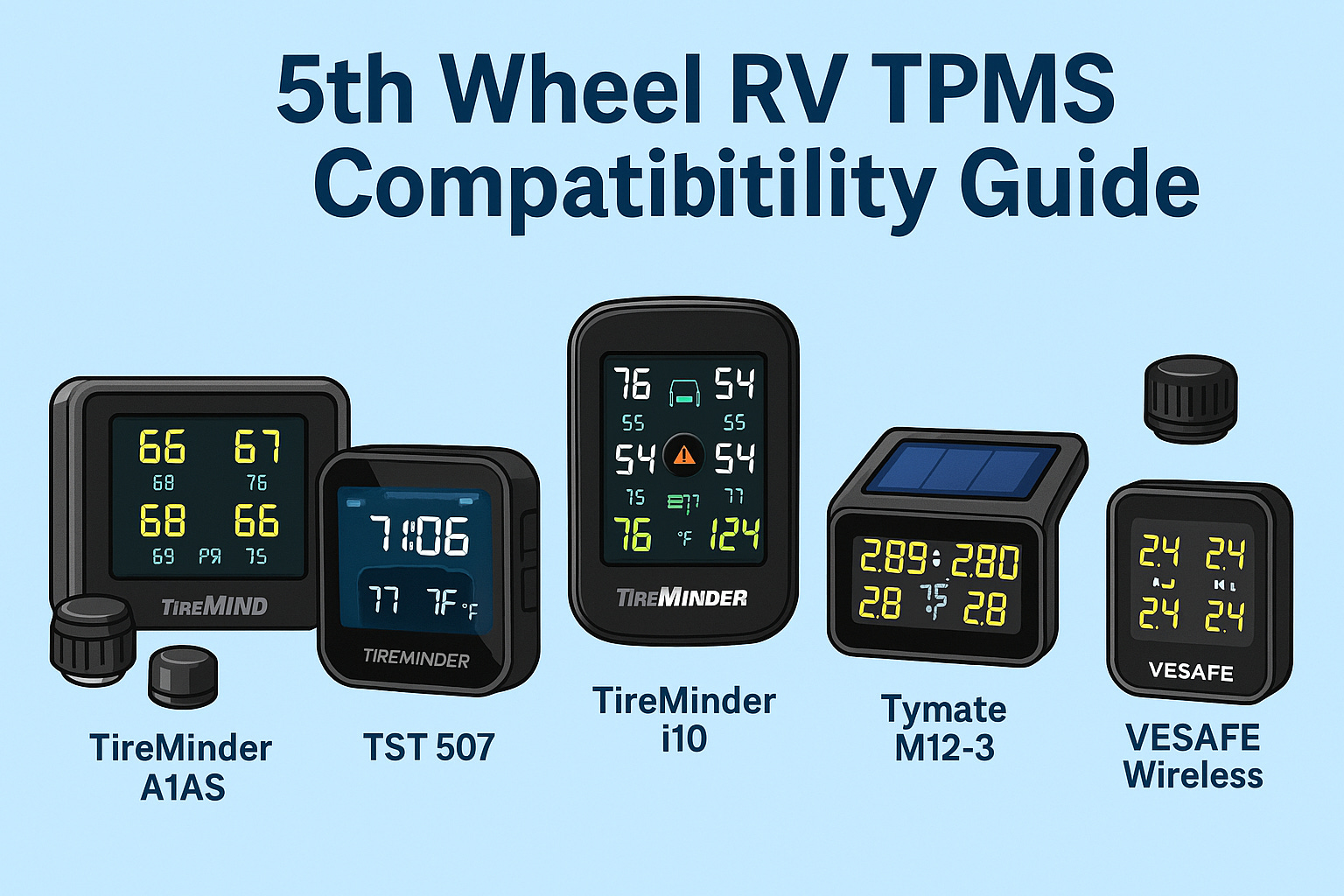
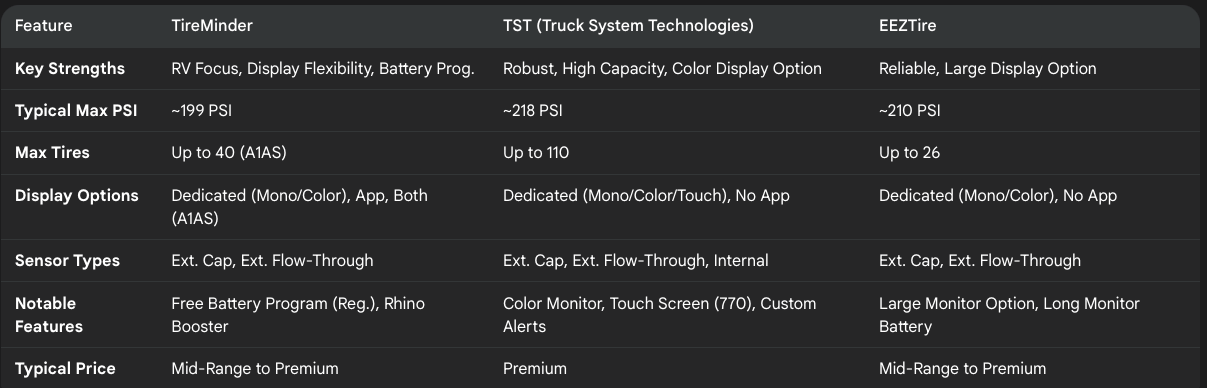
TireMinder A1AS: This flagship model offers maximum flexibility by providing both a large 5.5-inch color LCD monitor and smartphone app integration via Bluetooth. It monitors pressure (0-199 PSI) and temperature for up to 22 tires simultaneously (expandable to 40), checks tires every 6 seconds, and boasts +/- 1-3 PSI accuracy. The kit includes the essential Rhino signal booster for reliable communication on long rigs. Users can choose between standard (cap) or convenient flow-through external transmitters. It features comprehensive alerts (pressure, temp, leaks, signal loss) and comes with a 3-year warranty. A notable perk is the free battery replacement program for registered users.
TireMinder i10: A more budget-friendly option featuring a dedicated 3.15-inch monochrome LCD (no app connectivity). It monitors up to 20 tires, includes the Rhino booster, and is available with standard or flow-through sensors. Accuracy and pressure range are likely similar to the A1AS.
TireMinder Smart TPMS: This system eliminates the dedicated monitor, relying solely on a smartphone app (iOS/Android) for display and configuration. It monitors up to 22 tires and includes a Bluetooth adapter that provides backup audible/visual alerts if the phone isn't actively displaying the app. It also comes with the Rhino booster and offers both standard and flow-through sensor options.
Overall Assessment: TireMinder offers well-regarded, RV-specific systems with options for different user preferences regarding displays (dedicated, app-only, or both). The free battery program is a valuable bonus.Alerts are reportedly fast. The primary potential drawback is that their feature-rich systems, like the A1AS, tend to be at the higher end of the price spectrum.
Brand Spotlight: TST (Truck System Technologies)
Overview: TST is another top contender, frequently compared with TireMinder, and known for robust, feature-rich systems originally developed for the trucking industry. Their color display option is a popular feature.
Key Models:
TST 507 Series: This has been TST's long-standing, popular line. It's distinguished by its optional 3.5-inch color LCD monitor. It boasts a very high monitoring capacity (up to 110 tires across 4 trailers) and a wide pressure range (0-218 PSI), suitable for virtually any RV. A signal repeater is included in kits. Users can choose between cap sensors (suitable for rubber or metal stems) and flow-through sensors (metal stems required), both with user-replaceable batteries (typically CR1632 or CR2032). The system provides comprehensive alerts (low/high pressure, high temp, rapid/slow leaks, low battery) with user-customizable thresholds. The display features auto-scrolling through tire positions for easy monitoring. TST offers a 3-year warranty. Internal sensors are also available, though their batteries are not replaceable.
TST 770 Series: This newer series appears to build on the 507, upgrading the monitor to a color touch screen interface, potentially offering easier setup and navigation. It likely shares the core functionalities, sensor options, and high capacity of the 507 series.
Overall Assessment: TST provides highly capable, reliable systems with excellent features for demanding RV applications, including high tire counts and pressures. The color monitor and customizable alerts are strong points. The choice between cap and flow-through sensors adds flexibility. Strong customer support, particularly through retailers like TechnoRV, is often noted. While generally priced competitively with other premium brands, some users found older cap sensor battery changes slightly difficult.
Subscribe 100% FREE
Brand Spotlight: EEZTire
Overview: EEZTire has been a significant player in the RV TPMS market since 2005, recognized for its reliability and often praised for its large, easy-to-read display.
Key Models (Often designated by sensor count/type, e.g., TPMS10B, E618, Pro 518C):
EEZTire Systems: Characterized by a large monitor (often 4.5" x 3", some models offer color). They support monitoring up to 26 tires with a high maximum pressure rating (up to 210 PSI). Both anti-theft (cap style) and flow-through sensors are available, featuring user-replaceable batteries. The monitor includes a long-lasting internal rechargeable battery (up to 60 hours) and is motion-sensitive to conserve power. The system provides comprehensive alerts (pressure, temp, leaks, battery, signal loss) based on continuous 6-second monitoring intervals. A signal booster is available and often included in larger kits.The monitor allows separate control/disabling of trailer tire monitoring. Warranty information varies across listings (1 year or 3 years ).
Overall Assessment: EEZTire offers a proven, reliable TPMS solution particularly well-suited for users who prioritize a large, clear, dedicated display and high pressure/tire count capabilities. User-replaceable batteries and sensor options are positives. While installation is generally easy, care must be taken to properly tighten sensors to avoid leaks. Be mindful of potential compatibility issues between newer 'Pro' models and older components and clarify the warranty period at purchase.
Other Notable Options
Lippert Tire Linc: Primarily an app-based system integrated into Lippert's OneControl smart RV platform. It monitors pressure and temperature for up to 20 tires, includes a repeater, and uses cap sensors with replaceable batteries. An optional standalone Alert Indicator provides basic warnings without needing the app open. Ideal for users already invested in the Lippert ecosystem.
GUTA: Offers a range of models (GT series) with dedicated displays (including color/touchscreen options like the GT80). Monitors up to 34 tires and pressures up to 188 PSI. Features multiple alerts, solar charging options, and available boosters. Appears to be a competitive option, potentially at a lower price point than the top three brands.
PressurePro & Doran: Offer systems with features like high tire counts (PressurePro Pulse FX up to 40 ) or specific alerts like Doran's FastLeak detection. PressurePro FX is app-based.
Tymate: Often positioned as a budget-friendly brand, frequently featuring solar-powered displays. Models like the M7-3/M12-3 typically have a lower maximum pressure range (e.g., 0-87 PSI), making them more suitable for cars, smaller campers, or light trailers rather than large 5th wheels or motorhomes.
Choosing between these brands often involves a trade-off between display preferences, integration capabilities, and cost. Users wanting the ultimate flexibility of both a dedicated screen and app might lean towards the TireMinder A1AS, albeit at a premium price. Those prioritizing a top-tier dedicated display with extensive customization might favor TST's 507 or 770 series. Users seeking a large, straightforward, reliable dedicated monitor may find EEZTire appealing. Those integrated into Lippert's system will likely consider Tire Linc. Budget-conscious buyers have options like GUTA or Tymate, carefully matching the system's pressure range and features to their specific RV needs.
Budgeting for Your TPMS: Understanding the Costs
Investing in a reliable TPMS for your RV requires understanding the associated costs. Prices can vary significantly based on several factors:
Number of Sensors: Kits are typically sold with a specific number of sensors (e.g., 4, 6, 8, 10, 12). The more sensors included, the higher the initial cost. Additional sensors purchased later also add expense.
Sensor Type: Flow-through sensors often carry a slight price premium over standard cap sensors due to their added complexity and convenience. Internal sensors generally have a higher upfront cost due to installation requirements.
Display Type: Systems with advanced displays (large color screens, touch screens, or dual monitor/app capability like the TireMinder A1AS) tend to be more expensive than those with basic monochrome displays or app-only interfaces.
Brand Reputation and Features: Established brands known for RV-specific features, reliability, and strong warranties (like TireMinder, TST, EEZTire) typically command higher prices than newer or budget-oriented brands.
Included Accessories: Ensure the kit includes necessary components like the signal booster/repeater, mounting hardware, and charging cables. If a booster needs to be purchased separately, factor that into the total cost.
Based on pricing found in the research snippets (primarily from early-mid 2024), general cost tiers for aftermarket RV TPMS kits are:
Budget Systems: (~$70 - $170 for basic 4-sensor kits) These often include brands like Tymate or entry-level GUTA models, typically with simpler displays, possibly solar charging, and sometimes lower pressure ranges suitable for smaller RVs or cars.
Mid-Range Systems: (~$250 - $450 for 4-6 sensor kits) This range includes solid options like the TireMinder i10 or Smart TPMS, base kits from TST or EEZTire (perhaps without boosters or with monochrome displays), and the Lippert Tire Linc system.
Premium Systems: (~$450 - $700+ for 6-10 sensor kits) This tier encompasses the top-of-the-line models from leading RV brands, such as the TireMinder A1AS, TST 507/770 with color displays, and larger EEZTire kits including boosters. These offer the most features, highest capacities, and robust construction for demanding RV use.
Cost of Ownership: Beyond the initial purchase, consider long-term costs. User-replaceable batteries for external sensors will need periodic replacement (typically every 1-2 years). Factor in the cost of these batteries (check if free replacement programs apply ). If opting for internal sensors, be prepared for the potential cost of replacing the entire sensor unit when the non-serviceable battery eventually depletes after several years.
However, it's crucial to weigh these costs against the potential savings and safety benefits. The cost of a single heavy-duty RV tire can easily exceed $400 , and repairing the extensive damage caused by a trailer tire blowout can run into thousands of dollars. Even the modest fuel efficiency gains (1-3%) provided by maintaining proper inflation can add up to significant savings over the long distances RVers often travel. Preventing just one major tire-related incident – whether a blowout causing damage or simply avoiding the premature replacement of multiple expensive tires due to underinflation wear – can easily justify the entire cost of a high-quality TPMS. Therefore, viewing the purchase of a reliable RV TPMS not merely as an expense, but as a strategic investment in safety, tire longevity, fuel efficiency, and peace of mind is essential. The higher price of premium, RV-specific systems often reflects features (like high accuracy, temperature monitoring, robust sensors, and necessary signal boosters) that directly address the unique risks and potential costs associated with RV tire failures.
Conclusion: Investing in Safer, Smarter RV Travels
The journey in an RV offers unparalleled freedom, but safe operation hinges on diligent maintenance, with tire care being paramount. For RVs, especially large trailers and 5th wheels, a Tire Pressure Monitoring System transcends being a mere accessory; it becomes a fundamental component of a comprehensive safety strategy. The amplified risks associated with heavy loads, multiple axles, and the potentially devastating consequences of a blowout on a large rig underscore the critical need for continuous, real-time monitoring of both tire pressure and temperature.
This guide has detailed why aftermarket direct TPMS systems are the standard for achieving this level of monitoring on RVs, covering the essential features to consider – from sensor types (carefully matching external sensors to valve stem type) and display preferences (dedicated screen, smartphone app, or both) to ensuring adequate pressure range, tire count capacity, and the crucial inclusion of a signal booster for reliable communication. Leading brands like TireMinder, TST, and EEZTire offer robust, RV-focused solutions, each with slightly different strengths catering to various user needs and budgets.
While the initial cost of a quality RV TPMS might seem significant, it represents a prudent investment. The potential savings from preventing even a single tire failure – encompassing tire replacement, costly RV damage repair, and enhanced fuel efficiency – can easily outweigh the purchase price. More importantly, the enhanced safety and peace of mind provided by knowing your tires are operating within safe parameters are invaluable on the road.
Ultimately, choosing and installing a reliable aftermarket TPMS tailored to your specific RV setup is one of the most impactful upgrades an owner can make. It empowers drivers with critical information, mitigates significant risks, and contributes to safer, more efficient, and ultimately more enjoyable RV adventures. While TPMS is an invaluable tool, it should supplement, not replace, regular visual tire inspections and periodic manual pressure checks with an accurate gauge. Safe travels!
Since TPMS systems and tires go hand in hand - you will want to check out our 5th Wheel RV Tire Bible
#RVTPMS #RVSafety #TirePressure #TPMS #TireMinder #TSTTPMS #EEZTire #5thWheel #RVMaintenance #RoadSafety #RVMods #RVTips #FullTimeRV #GoRVing #RVLife #TireCare #RVHacks #TravelTrailer #Motorhome #RVLiving #RVGeeks #TechTuesday #SafeTravels #RVUpgrades #WolfTrekRVStuff
Yes, this post has everything you'd ever wasn't to know about current RV Tire Pressure Monitoring Systems. It's an excellent article. When I purchased our system, the flow through sensors either weren't available or I just didn't know about them.
We have a TST brand purchased from TechnoRV, model 507 with 4 caps. The system has worked extremely well. It has a rechargeable monitoring system that we place on the dash. I prefer this method over a phone app. Mainly because it's in your face. You know exactly what's going on. Even to the point of sun direction. Depending on which direction you're traveling somebody usually gets the side windo heat. You can see it in the tires. The sun side gets higher temperatures and higher pressures.
The Real benefit is piece of mind. You know your tires are good. If there's a problem you know which tire is the problem.
Tire Pressure is critical when towing. All trailer tire installers that know what they're doing recommend inflation to the tires rated Pressure which can be quite high. Our tires are G rated, 14 ply tires. Pressure is rated at 110psi. I generally inflate our to 105. Once you're on the road the tires heat up and the pressure goes up quickly. So, I give them that 5psi margin.
An important consideration on this topic is having a compressor that will efficiently pressurize your tires to over 100psi if your tires are rated that high. Not just any compressor will do that. You'll have to consider power, AC or DC that is available to you on the road and also size. Everything in an RV is either lighter or smaller.
Excellent read. Technical stuff can be boring but this subject is important. Good job.